January in the garden
Written by Shauna Daly MVB.
January is a month where the garden is still slumbering, the hours of light are short and the ground is often covered with a dusting of frost. However, Spring is right around the corner as the days are gradually lengthening and the snowdrops and irises are beginning to poke their heads up.
Now is the time to plan your garden and decide what you would like to grow this year. Seeds can be ordered as well as bare root trees. These trees are often cheaper than potted trees and can be planted whenever the ground is not frozen. Chose native varieties as often as possible. For a hedge, these include holly, spindle, crab-apple, hawthorn, blackthorn, hazel, alder, willow, dogwood, guelder rose, elder or yew. Hedges have numerous benefits including providing nectar for pollinators, food and shelter for birds and preventing soil erosion.
Another job that can be done in January is to get tools cleaned and ready for the year ahead. Spades, trowels, loppers, hoes and rakes should be brushed to remove soil and dirt. A little oil can be applied to prolong the life of the tool. If you are lucky enough to have a greenhouse or poly tunnel, January is an ideal time to get it tidied and washed, removing hibernating pests and fungus, reducing the pressure on future plants.
Permanently planted pots, with bulbs or perennials in them, will benefit from some new compost or mulch. Remove the first 5cm of old compost and replace with a fresh layer. This will provide new nutrients and result in better growth.
January is the perfect time to prune some fruit trees, such as apple and pear, as well as bushes like blackcurrant and gooseberries. Take the time to do some research beforehand, trimming only dead or crossing branches if you are unsure.
There are a few vegetables that can be sown in January, especially if you have a greenhouse. These include onions, chillis, peppers and aubergine. Carrots and radish can also be sown, but should also be indoors. Broad beans can be sown outdoors if you have a warm, sunny and free draining garden and can also be started indoors.
If you haven’t sown sweet peas in the Autumn, you can sow them now. A toilet roll or long pot is perfect for their roots. They can be sown inside and once germinated should be put outside, in a cold frame or greenhouse. They are pollinator friendly and have a beautiful fragrance. It is too early to sow many other flower seeds just yet!
If you have rhubarb, this is the time to ‘force’ it. This simply means placing a bucket or a pot with no holes on top of it. This must be 40cm tall and completely exclude light. The rhubarb will grow upwards, searching for light, giving you tender and sweet stalks. Once the leaves hit the top they will start to twist and split so check regularly and harvest by pulling the stems.
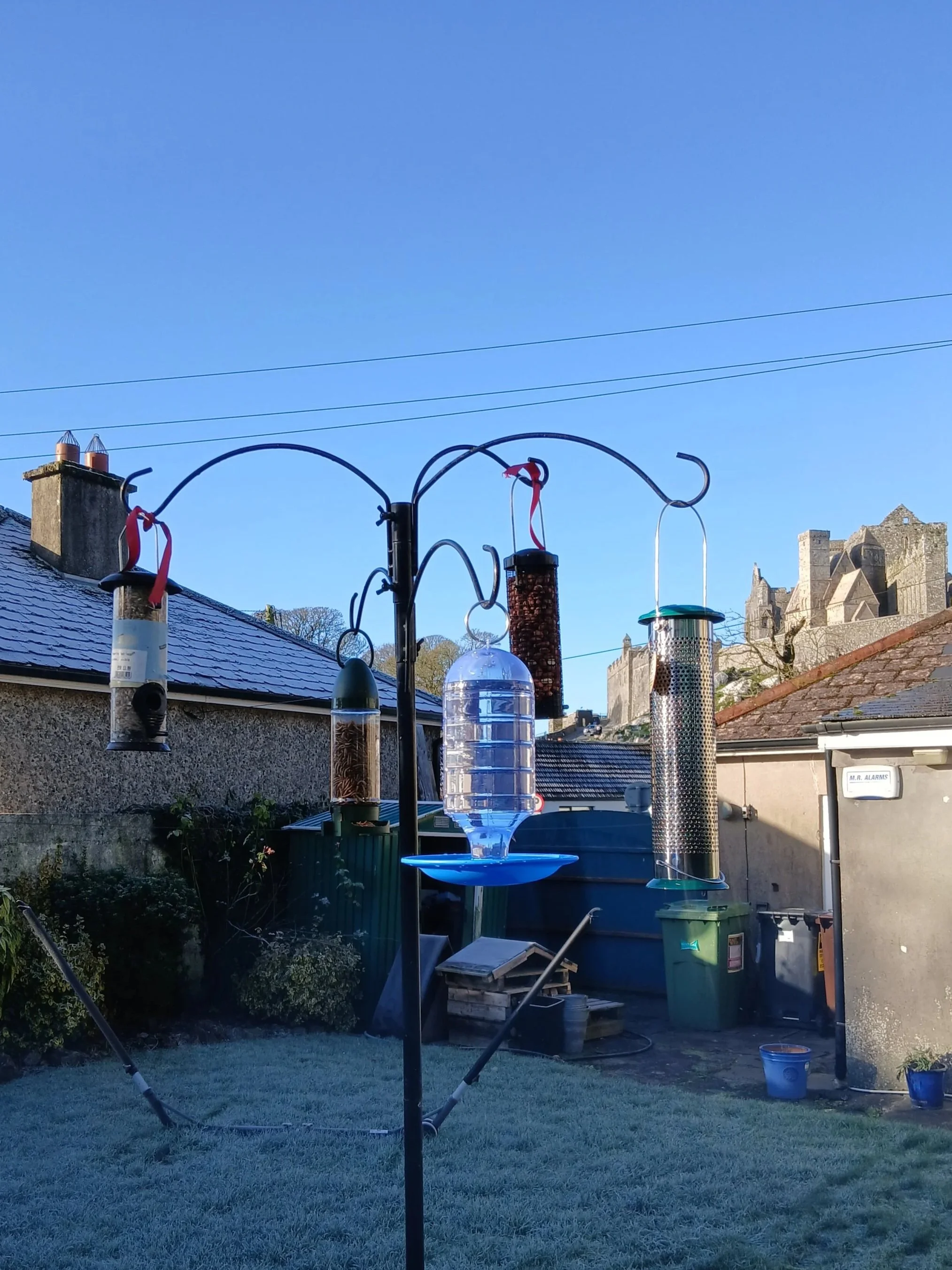
Don’t forget to keep feeding the birds. Peanuts, seeds or meal worms will help see them through this lean time. Keep a water supply accessible for them too, especially if there is frost.