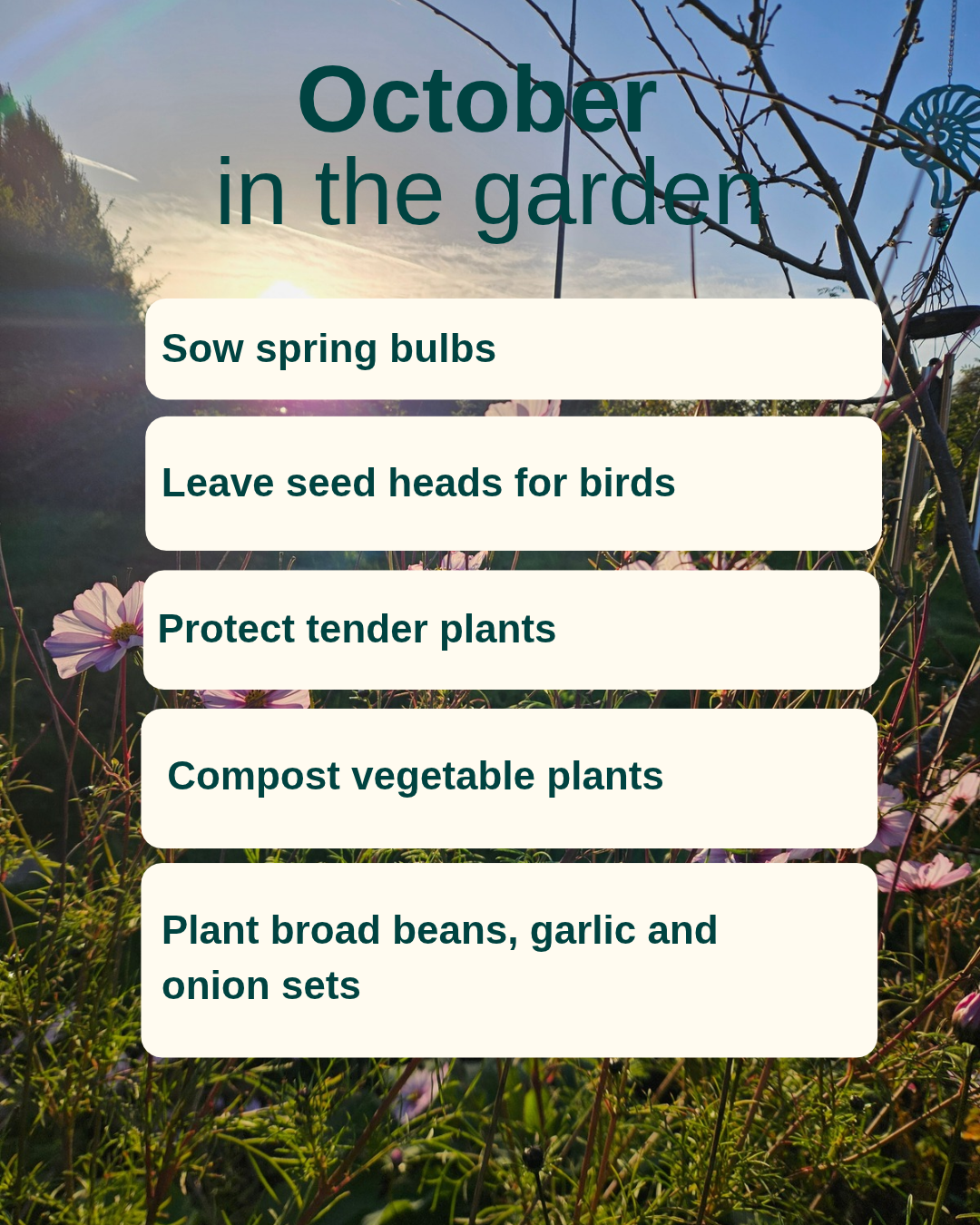
October Gardening Guide
October is the month where we get the last of the late summer and the beginning of the cold decline into winter. The soil is still warm but the air is cooling rapidly.
This is an ideal month for planting bulbs. Choose native varieties such as fritillaria, English bluebell or wood anemones. Other pollinator friendly bulbs include muscari, crocus, snowdrop and hyacinth. As a general rule, plant them at a depth 3 times their height.
With the soil still warm, other perennials, shrubs and trees can be moved now. They will get established before the onset of winter.
Seed-heads can be left on plants such as cone flowers, verbena and teasel to feed birds. Other hollow-stemmed plants should be left also- this will provide a place for insects such as bees to hibernate.
With winter looming, it is time to bring in tender plants to protect them from frost. If they cannot be moved, you can wrap them up in fleece. The vegetables in the greenhouse are slowing down and soon it will be time to clear the plants and compost them. Any other crops that are finishing their production outside should also be lifted and composted.
A layer of mulch can be added to the flower and vegetable beds. This will lock in heat and moisture and help to prevent weeds. Compost, bark chippings or sheep’s wool can be used.
It is time to get your broad beans planted for an early crop next year. The variety Aquadulce is excellent for overwintering. Garlic cloves can also be sown, along with onions sets.
If you have grown apples or pears and have not eaten them already, take them in and store somewhere cold, dry and dark